I need to credit Chris Dunham of the Maine Genealogy Network for the information about Cyrus Buck and the picture in this post. If you haven't checked out this great web site for those with Maine roots, you really should. This is a link to his original post.
In the Greenwood City Cemetery (Martin Cemetery) in Greenwood, Maine, one headstone bears an unusual epitaph. The stone is inscribed with the name "CYRUS M. BUCK" and gives his birth and death dates but it is the rest of the inscription that draws attention. "God is nature; Bible a humbug written by wicked, vulgar priests. Death was a debt I owed. I have paid that debt, so must you. To do good was my religion." Chris posted an article from the Lewiston Evening Journal of 18 Dec. 1935 that gives some explanation of the life and views of Cyrus Buck. It states that the inscription was requested by Cyrus. The short story is that Cyrus underwent a great change in outlook after the death of his mother. The author of the article said he began to follow the philosophy of "Tom Payne" and "made himself think he was an atheist."
My connection to this headstone is that Cyrus was married to the grand-daughter of my 4th great-grandfather, Rev. Edward M. Whittle, a Methodist preacher. I hadn't found information that Edward had more children than my 3rd great-grandmother Martha who married Moses Yates. However, if Lydia Whittle was his grand-daughter then Martha must have had a brother. This makes Lydia Whittle Buck my 1st cousin, 4 times removed.
A point of correction is that the philosophy of Thomas Paine was not atheism but Deism. Deism was a common philosophy among the founding fathers. Deists believe in the existence of God based on reason and nature but do not accept the Bible as the infallible word of God. They believe that after creation, God has left the universe to run on its own according to natural laws. Looking at the quotes of Thomas Paine give context to the epitaph of Cyrus Buck.
"I believe in the equality of man; and I believe that religious duties consist in doing justice, loving mercy, and endeavoring to make our fellow-creatures happy."
All national institutions of churches, whether Jewish, Christian or Turkish, appear to me no other than human inventions, set up to terrify and enslave mankind, and monopolize power and profit."
"I do not believe in the creed professed by the Jewish Church, by the Roman church, by the Greek Church, by the Turkish Church, by the Protestant Church, nor by any Church that I know of. My mind is my own Church."
Given Deism's rejection of the Bible and Christianity, it is easy to see how one might mistake Cyrus an atheist. However, Deists marvel in the beautiful order and harmony of the natural world and believe this proves the existence of God. Since Deism isn't an organized religion but merely a philosophy, it is not possible to make a list of famous Deists. However, some famous people who expressed views in accordance with Deism include: Abraham Lincoln, Albert Einstein, Benjamin Franklin, Charles Darwin, Ethan Allen, George Washington, John Locke, James Madison, Mark Twain, Thomas Edison, and Thomas Jefferson. It would seem that Cyrus Buck's views were not so unusual after all.
Tuesday, April 3, 2012
Monday, April 2, 2012
1940 Census
My finds so far: Carter - Grandparents & Dad
Yates - Grandmother and Mom
Yates - Great grandparents & great aunts and uncles
Blake - Grandfather
Yates - Grandmother and Mom
Yates - Great grandparents & great aunts and uncles
Blake - Grandfather
Labels:
Bethel,
Carter,
Census,
Cotton,
grandparents,
Greenwood,
Maine,
records,
research,
Woodstock,
Yates
Close Call
Once again, I owe this find to Chris Dunham of Maine Genealogy Network. It comes from the Lewiston Evening Journal of 5 November 1878 and describes a near tragedy for the Carter family.
Relatives (age in Nov 1878) involved in this story:
Hon. E. M. Carter is Elias Mellen Carter (67) - my 3rd great-grandfather
Mr. Williamson "an old gentleman" is John Williamson (90) - my 4th great-grandfather and his daughter, Rebecca Ann Williamson (62), wife of Elias Mellen.
Sunday, April 1, 2012
First Doctor in Bethel
Timothy Carter was born November 27, 1768 in either Ward, Massachusetts to Timothy and Sarah (Walker) Carter. He was a descendant of the immigrant Rev. Thomas Carter of Woburn, Massachusetts. He is my 4th Great-Grandfather and the source of my earliest interest in family history. Howard Lapham in The History of Bethel, Oxford, Maine: 1768-1890, Formerly Sudbury, Canada, says that when Timothy was 11 years old, his father, a house carpenter, fell from a building and was killed instantly and Timothy was sent to live with a family in Sutton. Lapham describes him as having "ability and pluck." While Lapham doesn't name the family that took Timothy in, he does provide one clue when he says Timothy worked for "the man in whose family he lived and who was a dealer in oil."
Timothy's first wife was Frances "Fannie" Freeland, daughter of Doctor James and Mehitable (Mellen) Freeland. She was born September 4, 1771 in Sutton, Massachusetts. They met when Timothy came to study medicine under the tutelage of her father. They were married in 1793.
I'm not sure why they chose to leave Massachusetts and settle in Maine but in 1799 they moved to Bethel, Maine - the part of town along the Androscoggin River called Middle Intervale. Although this is several miles from the center of town now, Lapham calls the area a "center of influence" that was growing more rapidly than other sections of Bethel. At that time they had three small sons, Lawson, Galen and James. Family legend is that Frances was pregnant at the time and made the trip on side-saddle while pregnant with their fourth son, Timothy Jarvis. I remember seeing her side-saddle when I was growing up but I don't know where it is now. After moving to Bethel and giving birth to Timothy Jarvis, Frances & Dr. Timothy had three more children, Luther Cullen, Frances and my 3rd great-grandfather, Elias Mellen.
Google Maps says it is 212 miles on present-day roads from Sutton to Bethel. By car it is 4 hours and 4 minutes but I'm sure it was a lot more challenging to make the journey on horseback while pregnant.
Eva Bean in her book East Bethel Road, calls Dr. Timothy Carter "the first physician to settle in town" and says they lived first in a home built by Enoch Bartlett that was later replaced by the house my grandparents lived in for most of my life. The family home built by Dr. Timothy is still in my family and the current resident is my cousin, John Carter. This house is called the Brick End House because it is indeed brick on one end. Frances died while the house was being built. She was only 44 years old and left behind six sons and one daughter. The five oldest sons married and moved away from Bethel but the youngest, Elias Mellen Carter remained and lived in the Brick End House.
I plan to go this summer and get better pictures from the cemetery specifically of the graves of my ancestors but this is a generic photo of the cemetery.
Timothy's first wife was Frances "Fannie" Freeland, daughter of Doctor James and Mehitable (Mellen) Freeland. She was born September 4, 1771 in Sutton, Massachusetts. They met when Timothy came to study medicine under the tutelage of her father. They were married in 1793.
I'm not sure why they chose to leave Massachusetts and settle in Maine but in 1799 they moved to Bethel, Maine - the part of town along the Androscoggin River called Middle Intervale. Although this is several miles from the center of town now, Lapham calls the area a "center of influence" that was growing more rapidly than other sections of Bethel. At that time they had three small sons, Lawson, Galen and James. Family legend is that Frances was pregnant at the time and made the trip on side-saddle while pregnant with their fourth son, Timothy Jarvis. I remember seeing her side-saddle when I was growing up but I don't know where it is now. After moving to Bethel and giving birth to Timothy Jarvis, Frances & Dr. Timothy had three more children, Luther Cullen, Frances and my 3rd great-grandfather, Elias Mellen.
Google Maps says it is 212 miles on present-day roads from Sutton to Bethel. By car it is 4 hours and 4 minutes but I'm sure it was a lot more challenging to make the journey on horseback while pregnant. Eva Bean in her book East Bethel Road, calls Dr. Timothy Carter "the first physician to settle in town" and says they lived first in a home built by Enoch Bartlett that was later replaced by the house my grandparents lived in for most of my life. The family home built by Dr. Timothy is still in my family and the current resident is my cousin, John Carter. This house is called the Brick End House because it is indeed brick on one end. Frances died while the house was being built. She was only 44 years old and left behind six sons and one daughter. The five oldest sons married and moved away from Bethel but the youngest, Elias Mellen Carter remained and lived in the Brick End House.
Dr. Timothy remarried before 1823 (first child born in 1823) to Lydia Russell. They had five children, Lydia, Sarah, Abigail, Theodore, and Benjamin - all of whom made Bethel their home. Portraits of Dr. Timothy and Lydia hang in the front parlor of the Brick End House. Dr. Timothy died February 25, 1845 and is buried across the road from the Brick End House in the Middle Intervale Cemetery. His family plot is surrounded by a wrought iron fence a few rows into the cemetery and just to the left of the gate.
I plan to go this summer and get better pictures from the cemetery specifically of the graves of my ancestors but this is a generic photo of the cemetery.
Howard Lapham in The History of Bethel, Oxford, Maine: 1768-1890, Formerly Sudbury, Canada, says that prior to the arrival of Dr. Timothy, people were left to their own devises or had to send to Fryeburg for a doctor. Lapham also tells of two other physicians who briefly practiced in Bethel. One was a German named Dr. Martin who came during the Revolutionary War with Baron von Steuben and followed some soldiers to settle in Maine. He was "a man of intemperate habits to such an extent as to disgust the people, even in those days of free frum and its liberal imbibation." In 1790, Dr. John Brickett was in Bethel but he married a woman from Haverhill, Massachusetts and returned to practice in that town.
In addition, many in Bethel benefited from the natural remedies and treatments of Molly Ockett (her name is spelled in a variety of ways), a local Native American woman who traveled around western Oxford county tending to people. Every July, Bethel has a festival named in her honor - Mollyockett Day. She is a very interesting woman and I'll write more about her in a future post. Lapham says she "felt deeply chagrined when a physician came, and she realized she must seek a new field of work." This seems a bit extreme as I'm sure there were plenty of families in need of services to keep both of them busy.
I have a bit more information about the practice of Dr. Timothy and information on his oldest 5 sons who went on to lead very distinguished lives, more about Elias Mellen Carter, and more about Molly Ockett so this post will be continued...
Monday, March 26, 2012
Literary Connections
Thomas Philbrick testified against his neighbor, Eunice "Goody" Cole (age 36) when she was accused of witchcraft in 1656. The court solicited testimony from two dozen witnesses. Evidence of the occult included strange scrapings on houses, fierce cats appearing and disappearing, and a private conversation that was somehow known to the accused. The charges against her included the death of an infant girl, illness of a man and the destruction of domestic animals. Thomas Philbrick's testimony revolved around a statement by Goody Cole that if his calves ate any of her grass "she wished it might poysen them or choke them." He continued to say that he never saw one of his calves again and "the other calfe came home and died aboute a weeke after." (Dow, History of Hampton)
The year after Thomas Philbrick testified against Goody Cole, his son John, John's wife Ann (Knapp), their daughter Sarah and five others drowned when their sloop sank just outside the harbor as they headed to Boston. The town records state, "The sad hand of God upon eight psons goeing in a vessell by sea from Hampton to boston, who were all swallowed up in the ocean soon after they were out of the Harbour." Given the superstitious nature of the community, the blame was placed on Goody Cole. This event became the inspiration John Greenleaf Whittier's poem, "The Wreck of the Rivermouth."
In 1680 when she was buried, the men of the town were frightened by her witchcraft conviction so they put a stake through her heart with a horseshoe hanging on the end. This was supposed to prevent the Devil from releasing her spirit to bewitch the community.
Thomas Philbrick & Elizabeth Knapp
James Philbrick & Anna Roberts
James Philbrick & Hannah Perkins
Ebenezer Philbrick & Bethia Marston
Ruth Philbrick & Joshua Rand
Philemon Rand & Sarah Rand
Lazarus Rand & Elizabeth "Betsy" Clark
Eunice Rand & Timothy Cox
Christiana Cox & John Cotton
Francis Llewellyn Cotton & Lizzie Philbrick
Ray Cotton & Annie Gibbs
Fern Lyndell Cotton
Second Line:
Lydia Rand (d. of Philemon) & John Lunt
Tryphenia Lunt & William Cotton
John Cotton & Christiana Cox
Sources:
http://www.hampton.lib.nh.us/hampton/biog/pooroldgoodycole.htm
http://www.hampton.lib.nh.us/hampton/biog/goodydemos.htm
Sunday, March 25, 2012
When Your Family Tree Doesn't Fork...
In the U.S. we have a natural horror of marrying a cousin. You'll end up with deformed children!! Well, guess what? It's not even close to true! When you start doing genealogy, you realize how quickly the number of individual people grow as you progress through the generations - 2 parents, 4 grandparents, 8 great- grandparents etc. Ten generations brings one to the potential for 1024 direct ancestors and if you go back to the time of Charlemagne it's an estimated 281 trillion! Have that many individuals really existed since the beginning of mankind?
Well, the short answer is no. We can't have more ancestors in a generation than the total known population of the earth at the time. Therefore it is estimated that 80 percent of marriages have been between first or second cousins and 100 percent of marriages will find a connection if you go back far enough. The cool thing about this reality is that you are very likely to find connections to rich, famous and historically significant figures if your ancestors came from the same general area as theirs during colonial times (New England for me). In fact, I am a 10th cousin of Barack Obama on his mother's side, the Dunhams.
If you're researching your family tree back to colonial times or earlier, you will find many, many others who are also searching for the same families and therefore your cousins. Besides the fact that it is statistically impossible to have 281 trillion European ancestors in your 30th generation, one needs to remember the lack of mobility people had prior to the 20th century. In previous centuries, most people were born, lived, and died in the same town. Then there are factors such as the inter-marrying of the European royal families. All of these factors lead to more cousins than distinct individuals in your family tree. I can't say it still doesn't freak me out a bit when I see it in my own family tree but understanding the mathematical, sociological and scientific realities helps. I found the following web sites interesting.
"Facts about Cousin Marriage " Cousin Marriage Resources. 24 Mar. 2012. Web. 24 Mar. 2012. <http://www.cousincouples.com/?page=facts>.
R., Danielle. "10 Famous People Who Married Their Cousins." Listverse. Ultimate Listverse Top 10 Lists, 20 July 2008. Web. 24 Mar. 2012. <http://listverse.com/2008/07/20/10-famous-people-who-married-their-cousins/>.
Well, the short answer is no. We can't have more ancestors in a generation than the total known population of the earth at the time. Therefore it is estimated that 80 percent of marriages have been between first or second cousins and 100 percent of marriages will find a connection if you go back far enough. The cool thing about this reality is that you are very likely to find connections to rich, famous and historically significant figures if your ancestors came from the same general area as theirs during colonial times (New England for me). In fact, I am a 10th cousin of Barack Obama on his mother's side, the Dunhams.
If you're researching your family tree back to colonial times or earlier, you will find many, many others who are also searching for the same families and therefore your cousins. Besides the fact that it is statistically impossible to have 281 trillion European ancestors in your 30th generation, one needs to remember the lack of mobility people had prior to the 20th century. In previous centuries, most people were born, lived, and died in the same town. Then there are factors such as the inter-marrying of the European royal families. All of these factors lead to more cousins than distinct individuals in your family tree. I can't say it still doesn't freak me out a bit when I see it in my own family tree but understanding the mathematical, sociological and scientific realities helps. I found the following web sites interesting.
"Facts about Cousin Marriage " Cousin Marriage Resources. 24 Mar. 2012. Web. 24 Mar. 2012. <http://www.cousincouples.com/?page=facts>.
- We are all cousins - no two people are more distantly related than 50th cousins.
- Twenty-six states and all European countries allow first cousins to marry. It is also legal in Canada and Mexico.
- Leviticus 18 lists all forbidden sexual relationships. Cousin relationships are not included.
- Albert Einstein & Charles Darwin married their first cousins.
- Second cousins have little, if any increased chance of having children with birth defects, according to the book "Clinical Genetics Handbook." The National Society of Genetic Counselors estimated the increased risk for first cousins is between 1.7 to 2.8 percent, or about the same as any woman over 40 years of age.
R., Danielle. "10 Famous People Who Married Their Cousins." Listverse. Ultimate Listverse Top 10 Lists, 20 July 2008. Web. 24 Mar. 2012. <http://listverse.com/2008/07/20/10-famous-people-who-married-their-cousins/>.
- Jesse James & Zerelda "Zee" Mimms - 1st cousins
- Franklin Delano Roosevelt & Anna Eleanor Roosevelt - 5th cousins
- Johann Sebastian Bach & Maria Barbara Bach - 2nd cousins
- H.G. Wells & Isabel Mary Wells - 1st cousins
- Thomas Jefferson & Martha Wayles Skelton Jefferson - 3rd cousins
- Albert Einstein & Elsa - 2nd cousins
- Charles Darwin & Emma Wedgwood - 1st cousins
- Edgar Allan Poe & Virginia Clemm - 1st cousins; she was 7 when he moved into her home - her parents were his aunt and uncle & she was 13 when they married
- Jery Lee Lewis & Myra Gale Brown - she was 13 when they married
- Rudy Guiliani & Regina Peruggi - 2nd cousins
For more information, search "diamond theory of genealogy"
Saturday, March 24, 2012
Danger on the New Hampshire frontier
This has been a busy week and not much writing got done. However, I have continued to do some research and gather ideas for the blog. Here is the first of those stories.
When we think of the frontier and confrontations and conflict between settlers and Indians, most of us who were raised in New England think of the Great Plains. However, long before the wars on the Great Plains, the same conflict was happening much closer to home.
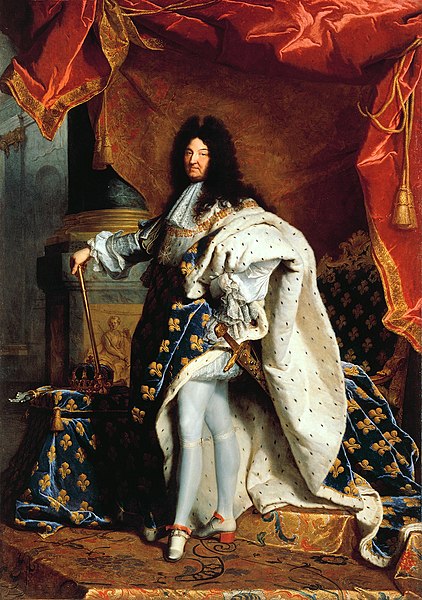
Philip Huntoon (Hunton), my 9th great-grandfather, first appears in New Hampshire records in 1689. His origins seem a bit muddled with one story involving his family fleeing France after the Edict of Nantes was revoked and another story that he was the younger son of an English gentleman and he came to seek his fortune in America. I find the Edict of Nantes story intriguing and will have to do more research on that.
King Louis XIV revoked the Edict of Nantes in 1685
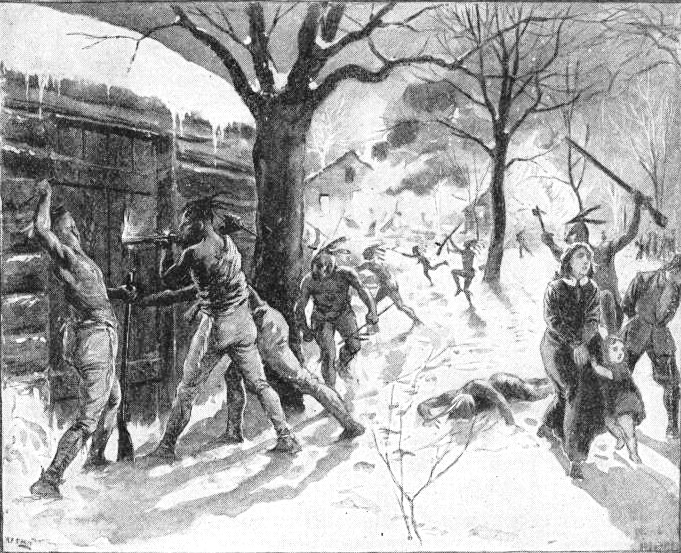
Philip received land in Exeter in 1697 and 1699. He then proceeded to move to Kingston in 1703 but had to flee in 1707 with others from the town because of danger from the Indians nearby. A year later, Philip is back in Kingston but apparently things were still not going well with the Indians. On the morning of July 22, 1710, Philip (age 46) and his oldest son, Samuel (age 21), were working in the field near his house when they were surrounded by a band of Indians. Samuel was shot and then scalped but reports say he lived another 24 hours in "great agony" (Belknap). Fortunately Philip's two younger sons, my 8th great-grandfather Philip Jr.(age 16) and John (age 14) were not in the field with their father and brother. Belknap says this is because their mother, Betsy, wouldn't let them go until they completed their morning prayer with her. Philip and his neighbor, Jacob Gilman, were taken prisoner and made to "run the gauntlet" (Huntoon, 20). They were marched to Canada and arrived in bad shape, having been little food during the trip and their feet bruised and bloodied. The Indians sold their captives to the French. This was part of Queen Anne's War (1702-1713), a precursor to the more well-known French & Indian or Seven Years War. You may be more familiar with the story of the raid on Deerfield, MA which was also part of Queen Anne's War.
Illustration of the raid on Deerfield, MA in 1704.
Philip and Jacob were ordered to build a saw mill and teach the French how to saw lumber the way the English did. They reportedly did this and were granted their freedom after two years. I can only imagine how surprised their families were when they returned. Philip went on to have one or two more children - the birth dates of two daughters are unknown to me as is the date of his wife, Betsy's death. It would seem that after Betsy died, Philip married a woman named Hannah and had a daughter, Sarah and it's possible that his daughter Elizabeth was also born after his captivity. I'm not sure of her birth date or which wife was her mother.
A waterwheel powered a vertical saw for colonial saw mills
Questions I'd like to research further -
Where did Philip come from?
Was Philip a Huguenot fleeing France after the Edict of Nantes was revoked?
When did Betsy die? Specifically, did she die during Philip's captivity?
Who is Jacob Gilman? I have Gilmans in my family tree and he is possibly another relative.
Philip & Betsey (Hall) Huntoon
Philip & Anna (Eastman) Huntoon
Josiah & Hannah (Huntoon) Judkins
Philip & Miriam (Hunt) Judkins
Moses & Aphia (Perry) Judkins
Calvin & Betsy (Judkins) Cole
Sydney & Aphia (Cole) Hayes
George & Anna (Rowe) Hayes
Estes & Eva (Hayes) Yates
Linona Alice Yates
Sources:
Belknap, Jeremy, and John Farmer. The History of New Hampshire. Dover: S. C. Stevens and ELA & Wadleigh, 1831. PDF.
When we think of the frontier and confrontations and conflict between settlers and Indians, most of us who were raised in New England think of the Great Plains. However, long before the wars on the Great Plains, the same conflict was happening much closer to home.
Philip Huntoon (Hunton), my 9th great-grandfather, first appears in New Hampshire records in 1689. His origins seem a bit muddled with one story involving his family fleeing France after the Edict of Nantes was revoked and another story that he was the younger son of an English gentleman and he came to seek his fortune in America. I find the Edict of Nantes story intriguing and will have to do more research on that.
Philip received land in Exeter in 1697 and 1699. He then proceeded to move to Kingston in 1703 but had to flee in 1707 with others from the town because of danger from the Indians nearby. A year later, Philip is back in Kingston but apparently things were still not going well with the Indians. On the morning of July 22, 1710, Philip (age 46) and his oldest son, Samuel (age 21), were working in the field near his house when they were surrounded by a band of Indians. Samuel was shot and then scalped but reports say he lived another 24 hours in "great agony" (Belknap). Fortunately Philip's two younger sons, my 8th great-grandfather Philip Jr.(age 16) and John (age 14) were not in the field with their father and brother. Belknap says this is because their mother, Betsy, wouldn't let them go until they completed their morning prayer with her. Philip and his neighbor, Jacob Gilman, were taken prisoner and made to "run the gauntlet" (Huntoon, 20). They were marched to Canada and arrived in bad shape, having been little food during the trip and their feet bruised and bloodied. The Indians sold their captives to the French. This was part of Queen Anne's War (1702-1713), a precursor to the more well-known French & Indian or Seven Years War. You may be more familiar with the story of the raid on Deerfield, MA which was also part of Queen Anne's War.
Illustration of the raid on Deerfield, MA in 1704.Philip and Jacob were ordered to build a saw mill and teach the French how to saw lumber the way the English did. They reportedly did this and were granted their freedom after two years. I can only imagine how surprised their families were when they returned. Philip went on to have one or two more children - the birth dates of two daughters are unknown to me as is the date of his wife, Betsy's death. It would seem that after Betsy died, Philip married a woman named Hannah and had a daughter, Sarah and it's possible that his daughter Elizabeth was also born after his captivity. I'm not sure of her birth date or which wife was her mother.
A waterwheel powered a vertical saw for colonial saw millsQuestions I'd like to research further -
Where did Philip come from?
Was Philip a Huguenot fleeing France after the Edict of Nantes was revoked?
When did Betsy die? Specifically, did she die during Philip's captivity?
Who is Jacob Gilman? I have Gilmans in my family tree and he is possibly another relative.
Philip & Betsey (Hall) Huntoon
Philip & Anna (Eastman) Huntoon
Josiah & Hannah (Huntoon) Judkins
Philip & Miriam (Hunt) Judkins
Moses & Aphia (Perry) Judkins
Calvin & Betsy (Judkins) Cole
Sydney & Aphia (Cole) Hayes
George & Anna (Rowe) Hayes
Estes & Eva (Hayes) Yates
Linona Alice Yates
Sources:
Belknap, Jeremy, and John Farmer. The History of New Hampshire. Dover: S. C. Stevens and ELA & Wadleigh, 1831. PDF.
Huntoon, Daniel T. V. Philip Huntoon and His Descendants. BiblioBazaar, 2009. PDF.
Labels:
attack,
Cole,
death,
Eastman,
Edict of Nantes,
Exeter,
Gilman,
Hall,
Hayes,
Huguenot,
Huntoon,
Judkins,
Kingston,
Native Americans,
New Hampshire,
Perry,
Queen Anne's War,
War,
Yates
Subscribe to:
Posts (Atom)