- One student, Dan, recognized a common ancestor from my blog - way back at the beginning of the year. His aunt had put together a family book and he remembered the name. With this project we sorted out our relationship - we are 5th cousins, once removed and both descend from William Yates, the founder of the town of Greenwood, Maine. Although his aunt had done much research, this project got him into his family's stories - interesting deaths, a cousin who was present at Lincoln's assassination, and conversations with living relatives.
- Andrew's family have been Mormon for many generations. He knew lots of names but not much of the story of his family's experiences. He researched and found his family was living in Nauvoo, Illinois during the persecutions and documented their pioneer migration to Utah. He was initially concerned that he would not have enough to research until he started to look beyond the names and dates.
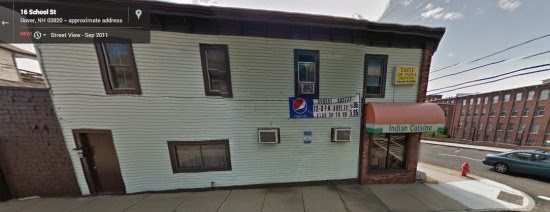
- Eli knew very little about his Greek and Lebanese background. We found his immigrant ancestors and followed them through documents. With the help of Google maps we got a street view of the building where his great-grandparents once ran a bowling alley. It is now an Indian restaurant.
- Another student, Hawar, fled with his family from Iran when he was very young. His father was a freedom fighter. They lived in various places before settling in Maine. His project is more about his immediate family and their journey. I highly encourage the use of maps to illustrate family history if possible.
- Caroline, started a discussion with her grandmother who conveniently lives with her family. This led to her grandmother digging out a box that had not been unpacked since she moved to Maine. What a treasure trove! Pictures, newspaper clippings, original passports of her Italian immigrant great-grandparents, Italian birth and marriage certificates and more! I have students take pictures or make copies of valuable items because I don't want to be responsible for their originals. Most importantly, her grandmother was thrilled by her interest and some truly wonderful conversations happened. It would have been so sad if Caroline had never had a chance to learn all this about her family.
- I found some newspaper articles for students. One involved an accident where a circus tent pole fell during a performance and injured (fortunately, not seriously) a young girl who was either the student's great-grandmother or great-grandaunt. Census records revealed the NYC 2nd great-grandparents of another student were employed as a chauffeur and a seamstress for a sporting goods shop and his great-grandfather had worked 26 weeks on a CCC road project as a stone mason.
Showing posts with label project. Show all posts
Tuesday, June 10, 2014
Family History Project 2014
For the past few years I've been refining my end of the year Family History Project. It is one option for my Advanced Placement US History students after they take the national exam in mid-May. It keeps getting better and better each year. My students did a great job and although I cannot write about them all, here are some highlights from this year's projects.
Monday, June 10, 2013
Genealogy & High School Students
Once again we are at the end of the school year and some of my students have chosen to research their ancestry as their final project. Each year, I get better at structuring the project for student success. The AP US exam was later this year than in the past and students did not have as much time to work on their projects but still achieved exciting results. Some highlights from this year include:
- A girl who got so caught up in her findings that she exclaimed, "This is so much fun! I spent two hours last night because I got so caught up in researching." She found many documents including her great-grandmother's immigration record. Her great-grandmother arrived on the Mauritania from Germany. The student thought it was really cool that she found a picture of the ship. Then I told her it was a sister ship to the Lusitania - that we learned about when studying the events leading to the First World War. It was fun to see her connect her family to the history we studied during the year. Students are required to find a minimum of 10 records to document their parents, grandparents, and great-grandparents.
- A girl who knew her family heritage was Italian but had no idea who the immigrant ancestor was or when he arrived in the United States. I was able to help her locate her great-grandfather's immigration record and we also found she had a great-grandmother from Quebec - something she did not know. She found numerous records to show how her family moved around from Vermont to Massachusetts to Maine. I have encouraged, and most have included, maps to show places their family has lived over time.
- A boy who got a large packet of information from his grandmother. I love that this project opens the conversations between the generations. Many have never discussed the family with their grandparents. The project also includes a mandatory interview with a grandparent or if that is not possible, with someone who can share what they know about the life of a grandparent.
Photos of people or of family heirlooms, gravestones, family homes are also highly encouraged. Most students haven't thought of including pictures of things in telling their family's story. They begin to realize that the things can help tell the story of the lives of their ancestors.
Over the past few years, I've found success in encouraging students to go where the research takes them. Many times school-based family history projects are all about filling in the tree and finding pictures of the people in the tree. I allow my students to focus on one line or multiple lines. Many ask how many generations they need to find. I tell them I would rather have them do it carefully with good research and documentation even if they only get a few generations done. The flexibility to follow the evidence has made it a more fulfilling experience for them. They don't get stressed out about finding "enough" ancestors and focus on finding the stories and learning about the lives of the ancestors they can document.
Subscribe to:
Posts (Atom)