Showing posts with label research. Show all posts

Sunday, January 8, 2017

2017 Genealogy Goals

Time to do a reboot! My blogging really declined last year. I focused more on researching and didn't get much of it written into blog posts. I also did a lot more with helping other people, especially my students, with their research. I feel like I lost a bit of my passion for the writing part and I'm going to try to recapture it for 2017.

Last year, I only had 41 posts. This is in comparison to 109 in 2015, 79 in 2014, 76 in 2013, and 77 in 2012.  I may have had a bit of burnout after 2015.

Some highlights of 2016 were

  • My trips to the New England Genealogical and Historical Society for research 
  • My trips to the Maine State Library in Augusta. 
  • Renewed my membership in the Maine Genealogical Society AND attended two special events where I got to hear Joshua Taylor and Judy Russell impart their wisdom. I strengthened my connections with other Maine genealogists. I still haven't made it to a monthly meeting of the Greater Portland Chapter but perhaps I can do that at least a few times this year. 
  • Went to more cemeteries than any previous year, created Findagrave memorials for my ancestors and others and filled some photo requests. 
  • Took over as treasurer of the Middle Intervale Cemetery Association. This cemetery has many of my ancestors including 5 direct line generations of Carters. 
  • Two other events kept me busy this year will be of interest to future generations - my son, Josh, got married in June and my second grandson, Andrew Elias Taylor, was born in August. 


Goals:

  1. 80 blog posts
  2. Attend more genealogy events, including monthly meetings of the local Maine chapter
  3. Continue to travel to cemeteries and photograph for myself and others
  4. Go to NEHGS several times for research
  5. Go to the Maine State Library several times for research
  6. Continue to add citations to my database 
  7. Learn more about DNA and its use in genealogy
  8. Get a genealogy club going at the high school/continue to help others learn about genealogy
Of course, I need to fit this all in around my work demands. That is definitely what puts the biggest obstacles up for me! 

Check out some posts that I didn't promote on Facebook because I got sidetracked and wasn't paying attention to my blog.


Saturday, October 8, 2016

Are Middle Generations the Middle Children of Genealogy?


So we all know that the oldest child gets the full attention of its parents and the baby of the family gets spoiled by being the last in the house. Middle children tend to get neglected. While researching, I've noticed that it's relatively easy to find documentation for my seventeenth-century immigrants since they all were in New England where good recording keeping was the norm. I'm most interested in sources that can tell me something about their lives, beyond the basics of vital statistics. There were also many town histories and family genealogies published around the turn of the 20th century that document the stories of these immigrants. Recent generations benefit from the memories of living relatives. However, the middle generations are tough for me to track down. Does anyone else feel like this is the case? What are your favorite sources for these late 17th century to early 20th century ancestors?

The census is a good starting point to gather a bit of information about one's ancestors. Some of the census years have interesting tidbits that can help flesh out the story of their lives a bit. Some of my favorite things to look at are (some are supplemental questions that are only answered by a few on the page):

  • 1860 & 1870 & 1880 - occupation, value of real & personal property, place of birth, literacy, citizenship, disability (deaf, dumb, blind, insane, idiotic, pauper, or convict). In 1880, the census takers started listing the relationship to the head of household. 
  • 1890 - much of this census is lost but you might be able to find some of your family
  • 1900 - age at marriage, number of children and number of living children (a good way to find children who are born and died before ever being recorded in a census). 
  • 1910 - language spoken, industry (more detailed than occupation), employment status including number of weeks worked in 1909, home ownership, Civil War veteran
  • 1920 - year of naturalization, mother tongue of person and parents
  • 1930 - owns a radio, veteran and list which war or expedition
  • 1940 - many more employment questions such as hours worked in a week, employed by a New Deal program, annual pay, 


The non-population schedules are interesting also. I have used the agricultural schedules to determine what my farmer ancestors were growing on their farms.

What's Growing on Your Farm, Great-Grandpa? - comparing two sides of my great-grandmother's family.
The Carter Farm in 1860 and 1880 - comparing two generations on the same farm
1860 Carter Farm - my first transcription of an agricultural census. Get a blank form and use it to see what is on each line.

Wednesday, June 22, 2016

Request For Assistance!

Sometimes you just never know who is reading your blog! As I was prepping for my son's wedding, a researcher, Christie Jackson, contacted me because of my posts about the Freeland family of Sutton, Massachusetts. She is preparing a book about cabinetmaker, Nathan Lombard. The book will include relevant information about the community in which he lived and worked. Nathan worked for James Freeland on the Freeland homestead and pictures were included in Roy F. Stone's book, The Sutton Freelands: Legends and Letters. 

Christie is looking for someone with access to these photos and/or any other primary source documents relating to the Freeland family and Nathan Lombard. She has been unable to locate similar photographs in the archives she has visited so far. I found the book at the New England Historic Genealogical Society in Boston. I suggested that Christie get in touch with them to see if they have any other sources related to the Freeland family or the Sutton community. Time is of the essence because the manuscript is due at the publisher by the end of July!

Is there anyone out there who knows a relative of Roy Freeland Stone, son of Clifton & Mary (Freeland) Stone? Roy lives or lived in Wilton, New Hampshire. I believe he was born about 1934. I will be doing some sleuthing over the next few days, but I wanted to get this published in case someone has direct access. If anyone has any leads on pictures of the Freeland homestead in Sutton or any documents relating to the Freeland family, please post a comment so I can follow up.

I will post an update - hopefully, telling you that a connection was made! Thank you in advance for helping.


Tuesday, June 2, 2015

Embarking on a Journey of Discovery - Family History Project 2015

One reason that I love the end of the school year is because some of my students choose to work on family history for their end of the year project. Each year this gets better and better. This year I had a few students who did double duty, they wanted to do a different project for a grade but worked on their family history just for fun. A few of the stories deserve their own space and can be found here:


Escaping Persecution
Napoleon, the Bootlegger
Something From Nothing & Finding A Lost Family History
The African Missionaries

A lot of students trace their families back to the Scottish and Irish settlers of Nova Scotia, New Brunswick, and Prince Edward Island. There are also quite a few with French Canadian ancestry. Sam's family comes from the same town, Sackville, New Brunswick, as my husband's family. Alex found ancestors immigrating from Italy, Ireland, and Belgium in the late 19th century.


The best parts are the conversations that take place between my students and their family members as they learn about their ancestors. Alec learned a lot more about his West Virginia branch and the tough life of his grandmother after the tragic death of her father. Maelah decided her family is boring because they didn't have any scandals and were immigrant mill workers from French Canada. I'm still hoping to find something that fills in some details for her and make her family story more interesting.


A number of students have family members who have already done quite a bit of the gathering of names so they are working on finding the interesting stories told by the documents. What was the profession according to the census? Jacob learned that one of his great-grandfathers was a musician in an orchestra. How much (or how little) money did your ancestor make? Adam found that his ancestor worked 52 weeks in 1939 and made $528 for the entire year. They paid $10/month to rent their house.

Of those who can go back to the Great Migration, Jeff is a direct
descendant of Mary (Towne) Estey. She was hanged as a witch on September 22, 1692. A few share distant connections with me. Jack and I connect through Nathan Lord, of Berwick, Maine. Patrick and I connect through the Abbots of Andover, Massachusetts. Ryan and I connect through John Cheney of Newbury, Massachusetts. It became a bit of game to see if they could find a cousin connection with me.

On the military front, we found a few veterans. Patrick found a Civil War ancestor with an awesome name: Ivory Snow. His middle name was Fogg so he was Ivory Fogg Snow. Lauren knew her 2nd great-uncle had been shot down in World War II. She didn't know her great-grandmother also had a fiance killed in the war. Alex found her 2X great-grandmother, who lived in Portland, Maine and was born in Nova Scotia, married a man from Virginia. On the marriage certificate from 1919, it lists his occupation as "soldier." Since many troop ships came through Portland during and after World War I, we speculate that they might be how they met.

I have second generation immigrants who are documenting their family and writing the stories of the home country and the names and dates of relatives before those are lost to future generations. I have a student who had family affected by the Holocaust. He is interviewing the son of the survivor and writing the memories and stories to preserve them. 

The projects aren't complete yet. They are due on Friday. I may have to share more updates and interesting finds after that. I'm excited to see so many of my students take an interest in their family history. 

Monday, April 20, 2015

Passion over Perfection - NERGC2015 Final Thoughts

D. Joshua Taylor
My final day of NERGC2015 was spent on two presentations by Josh Taylor and one on DNA. I was excited to see Josh in person since I did a blog interview with him prior to the conference. 


The first presentation was focused on Engaging the Next Generation of Genealogists. I thought he really hit the nail on the head when he urged societies to look beyond their four walls & meetings and instead go to where the "kids" are. One of his points was that the next generation is not used to interacting in a traditional way, preferring to follow and collaborate on the go - the way they can using social media. I couldn't agree more! I have very little interest in monthly meetings. I prefer a more dynamic, real-time interaction and I'm hardly a "kid" at 51. He shared some of his ideas for how to make this happen by starting with each individual and their personal goals. What brings them to the table in the first place? What is it that they want to find out? Scandal? Celebrity connection? Finding a Mayflower or Revolutionary War ancestor? 

The other big takeaway for me was the idea that igniting the passion was much more important than striving for perfection among those dabbling in genealogy and family history. Don't squash their passion by overwhelming them with rules. He told how his grandmother purposely let him make mistakes and chase down leads that she had already discarded because it's the thrill of the hunt that gets the genealogical imagination going. As he pointed out, who hasn't had to trim their tree when erroneous information leads you to the wrong ancestor? It made me feel a lot less guilty about my family history project that I do with my students. They are far from perfect and sometimes I know they've got something all wrong, but I've been careful about balancing the research and documentation rules with nurturing the thrill of the hunt. 

Between presentations
Presentation number 2 by Josh focused on the compiled genealogies of the late nineteenth and early twentieth century. While their lack of sources can make some people discount their value, he pointed out how, with a little careful reading, one can make an educated guess and figure out where to look for the documentation. Again, I liked the theme of looking at them as clues and one piece of the genealogy puzzle that is your family tree. 

Worrying about getting it right was also a topic of conversation amongst the geneabloggers attending the Special Interest Group on Thursday night. In the end, I think we were able to allay some fears and encourage more writers to try it out. I found the bloggers in the genealogy community to be wonderfully kind and encouraging when I was starting my blog. The one big positive, beyond finding cousins, was that blogging does make you pay attention to your research and documentation. We all agreed that blogging has made us better genealogists. 
New England Geneablogger Table
I'm not ready to blog in detail about Blaine Bettinger's talk on Third Party Tools for Analyzing DNA. Let's just say that I found it very helpful but DNA still boggles my mind a bit. I would highly recommend checking out Blaine's blog, The Genetic Genealogist. He is very knowledgeable and is capable of bringing the science down to a level where you don't have to be a scientist to understand it. 

Here are my final thoughts: 

  • If you're interested in genealogy or finding out about your family, just dive in and do it. You will learn as you go so follow your passion!
  • Don't worry about making mistakes. Everyone makes them and worrying won't stop it from happening. Just do the best you can and keep learning. 
  • Network, network, network! I've connected with two new people just this weekend. They are working on the Lyford family and that is one of my lines that I haven't yet given enough attention. You never know who will have the answers you are seeking. 
  • Whether you're interested in blogging in general or New England, in particular, check out these awesome blogs. Please let Heather Rojo know if you have a blog to add to the New England Geneabloggers list. Help and inspiration are also available at Geneabloggers.com.

Friday, April 17, 2015

In Genealogy Heaven - NERGC 2015 - Day 2

Today was another whirlwind day at NERGC in Providence.

Creating Maine Towns
I started my day with a great presentation, "Creating Maine Towns: How the Wilderness was Tamed" and was so impressed with the dynamic speaker, Carol Prescott McCoy, that I went to see another of her presentations in the afternoon. She talked about all my favorite places, like Sudbury, Canada, which isn't really Canada at all but Bethel, Maine and New Marblehead, which is now the town of Windham, Maine, where I live and teach. She even referenced my ancestor, William Cotton of Woodstock. Carol lives in Brunswick and has a genealogy business called Find Your Roots.

The second presentation was a fascinating case study where she outlined her process in trying to identify the mother of Mary Drummond.  Mary's father was quite easy to find, but her mother is a bit of a riddle. Thomas Drummond was an escaped slave who became a clothes dresser (tailor) and town crier in New Bedford, Massachusetts. His story is pretty fascinating as he came to own about $1500 worth of property, a sizable amount for any person in the early 19th century, much less a person of color. He was married twice and the second marriage took place just before or just after his daughter, Mary's birth. The records are conflicting, but the story is really interesting. 

In between Carol McCoy's presentations, I went to see Judy Russell's presentation on Women & the Law and although I thought I knew quite a bit about the topic, I definitely learned a lot more. As usual, she had really great examples to illustrate her points. I also went to see Diane Gravel's presentation, "Women in the World of Piracy". 

Of course, there was also all the networking, meeting new people, checking out exhibitors, and visiting with my favorite geneabloggers. By the end of each day, my brain is full! 

Friday, January 2, 2015

2014 Blog Recap - Happy New Year!


These stories received the most views: 
#1 - 09/14/14 - 470 Views - Humphrey Atherton's Quaker Curse

#2 - 05/10/14 - 361 Views - James Cole & the Horse in the Parlor

#3 - 11/30/14 - 235 Views - Happy St. Andrew's Day

#4 - 09/21/14 - 210 Views - Revolutionary War Surgeon

#5 - 03/29/14 - 154 Views - James Gibbons

#6 - 06/18/14 - 153 Views - Religion in Schools & Spanking Other People's Kids

#7 - 06/10/14 - 145 Views - Family History Project 2014

#8 - 03/29/14 - 118 Views - Thomas Lewis

#9 - 03/29/14 - 111 Views - Samuel Andrews

#10 - 02/21/14 - 102 Views - Christopher Grant

The three stories that were the most memorable or meaningful to me 


#1 - Five Generations Times Two!
#2 - The Importance of Family
#3 - Family History Project 2014


The stories that were the most interesting for me to research and write

#1 - Butcher Pirate and Ghost or Respected Fisherman?
#2 - The Original Bachelor
#3 - The Interesting Deaths of Thomas & Mary (Parker) Totman
#4 - She Wore the Pants in the Family
#5 - Squire of the Little Village
#6 - Love Letter to a Future Wife
#7 - The Homefront
#8 - Even the Drunkards Thank Us!
#9 - Two Murderers, One Gallows
#10 - A Pirate's Life and Ironic Death


Monday, September 1, 2014

Sarah - Who Are You? - Saturday Night Genealogy Fun

Randy Seaver challenged geneabloggers to explore their ancestors named Sarah LNU (or last name unknown) as part of his Saturday Night Genealogy Fun series.

Here is your assignment if you choose to play along (cue the Mission Impossible music):

1)  I have many females in my family tree database without a last name.  One of those female first names is "Sarah."  Do you have situations like this, where you don't know the surname of some females? [I call them LNU persons - Last Name Unknown.]


I have over 50 females named Sarah for whom I do not know their surname. I gave up counting after fifty. 
2) How many "Sarah" persons without a surname do you have in your genealogy database?  How many of them are your ancestor?  


I was only counting ancestors so...probably over 100 Sarahs total and over 50 related to me! Many are second wives of many times great-grandfathers, wives of uncles, etc. so they are not direct line ancestors. 
3)  If you have one that is your ancestor, have you looked recently to determine if there are more records online that might lead you to her surname?  Go look for one - you might be surprised!


4)  Tell us about your Sarah LNU ancestors with no surname.  Perhaps someone will read it and help you out!
Can you help me solve these??  

I'm going to try to solve 2 Sarah mysteries in this post. I'd love it if someone has information on these two Sarahs. 

1. Sarah married to Richard Pope (?-1694). This is an early Maine family and records are hard to find. No luck with records on FamilySearch and limited, unhelpful hints on Ancestry. My data originally came from the book, Old Kittery and her Families, available on archive.org. 


2. Sarah married Eleazer Higgins (1697-1743). They lived in Eastham, Massachusetts. A search on Ancestry reveals a tree where she is called Sarah Rush but has no sources for this fact. The rest of the tree is fairly well-sourced compared to many trees on the site. I couldn't find anything on FamilySearch. This is my original source for the basic information. 
26. “Richard Higgins, a resident and pioneer settler at Plymouth and Eastham, Massachusetts and at Piscataway, New Jersey, and his descendants,” Katharine Elizabeth Chapin Higgins, Worcester, Massachusetts: Higgins, 1918.

5)  Share your information in a blog post of your own, in a comment to this blog post, or on Facebook or Google+.

6)  NOTE:  If you don't have any "Sarah" persons without a surname, then pick another female first name.


Well, I sure didn't have that problem! 

Friday, August 1, 2014

Friday Funny - 18 Kids & No Reality Show!


While helping my students do some research for their family history projects, I found this source. While scrolling through and perusing the names, I happened on the family of John & Sarah (Winslow) Morrell. They were Quakers and had eighteen children born between 1758 and 1784. I know large families were common in colonial times and I don't even bat an eyelash at twelve to fourteen children but at fifteen or more with one wife is pretty rare in my research. I start to look at the names of the children and notice the ones at the end seem to take a turn - or is it just my quirky sense of humor? 

  1. Abigail
  2. Kesiah
  3. Peter
  4. Joseph
  5. Benjamin
  6. William
  7. Sarah (Twin)
  8. John (Twin)
  9. (Unnamed, stillborn)
  10. Hope - hmm...as in "I hope this is the last one?"
  11. Hope - born two years after the previous Hope
  12. Joseph
  13. Enoch - as in "enough already?"
  14. Hannah
  15. Peace - as in "For the love of God, I just need some peace!"
  16. Content - as in "In case you didn't understand, I am content with what I have!"
  17. David - (Twin)
  18. Thankful - as in "I am so thankful that I will not be having any more children?" (Twin)

    Sarah died in 1793 at the age of 52. At that point her children would span ages 9-35 if they all were living. She was 17 when her first child was born and 43 when the final twins were born. 

    Thursday, July 31, 2014

    52 Ancestors #31 - Theophilus Wilson

    Theophilus Wilson was my 9th great-grandfather. He was born in England about 1601 and died in Ipswich, Massachusetts on January 10, 1691. he was made a freeman in March 13, 1639. His parents were Rev. Thomas & Christian (Ower) Wilson. He was baptized, probably by his father, at St. George the Martyr, in Canterbury, Kent, England on December 20, 1601. Theophilus married Elizabeth ________ about 1634. 


    Linking the family tree - The relationship between Theophilus Wilson, child of Rev. Thomas, and Theophilus Wilson, immigrant to Ipswich was demonstrated in an article published in 2009 in the New England Historical and Genealogical Register (see citation below). It includes a search of records in England which show no records for Theophilus after 1636, the will of Rev. Thomas Wilson, and various statements and documents in New England from Theophilus Wilson's twin sisters, Martha (Wilson) Bachelor and Mary (Wilson) Treadwell, who emigrated with their husbands. His nephew, Samuel Taylor, son of Robert & Jane (Wilson) Tailer is another New England emigrant who helps establish the identity of Theophilus Wilson, immigrant. 


    The children of Theophilus & Elizabeth (___) Wilson were:

    1. Thomas born about 1634 in England, married Jane Swan, and died about 1703. 
    2. Seaborn born about 1636 in presumably at sea on the voyage to New England, married Lt. David Fiske, Jr. on September 5, 1655 in Cambridge, Massachusetts, and died on January 12, 1721 in Woburn, Massachusetts. 
    3. Elizabeth born about 1639, married John Pinder before August 16, 1658, and died March 29, 1671 in Ipswich, Massachusetts. 
    Rev. Thomas Wilson & Christian Ower
    Theophilus Wilson & Elizabeth
    Seaborn Wilson & David Fiske, Jr. 
    Anna Fiske & Timothy Carter
    Benjamin Carter & Sarah Stone
    Timothy Carter & Sarah Walker
    Timothy Carter & Frances Freeland
    Elias M. Carter & Rebecca Williamson
    Augustus M. Carter & Mary Frances Stanley
    Edward M. Carter & Fannie May Capen
    T. Richard Carter - my grandfather

    Prior posts about Rev. Thomas Wilson include:
    Battle of Britain
    Let Thanksgiving Bee Made For All Men


    Wilcox, Doris Schreiber, “Massachusetts Descendants of The Rev. Thomas Wilson, Author of the Pilgrims’ Christian Dictionarie: Theophilus Wilson, Martha (Wilson) Bachelor, Mary (Wilson) Treadwell, and Their Nephew Samuel Taylor,” New England Historic Genealogical Register, Vol. 163, 2009.

    52 Ancestors #29 Henry Herrick

    Henry Herrick was my 10th great-grandfather. He came from England about 1630 and settled in Salem and then Beverly, Massachusetts. His birth is estimated as about 1598 based on when he was released from training for defense and he died between November 24, 1670 and March 15, 1671. 

    Henry was active in the community and was made a freeman on May 28, 1631. He was the constable in 1656. The job of the constable in colonial times was to collect the taxes. He signed with his mark but his inventory included "Four Bibles and Other Books," making it difficult to determine whether he was literate or not. He is called a "yeoman" in records.

    Around 1634, Henry married Edith (or Editha) Laskin, daughter of Hugh Laskin. She was born in England about 1612 and is show in records as late as March 27, 1677. 

    Henry & Edith had eight children: 

    1. Thomas born about 1634, married Hannah Ordway (but they divorced soon after citing his "impotency"). She is called his "reputed wife" in the court notes. 
    2. Zachariah was baptized on December 25, 1636 in Salem, married Mary Dodge, daughter of Richard, about 1654, and died in Beverly on May 20, 1695. The will of Richard Dodge, Sr. mentions "my daughter Mary Herrick's five daughters." 
    3. Ephraim was baptized on February 11, 1638 in Salem, married Mary Cross, daughter of Robert & Anna (Jordan), on July 2, 1661 in Salem, and died September 18 1693. 
    4. Henry was baptized on January 16, 1640 in Salem, married first Lydia (possibly Woodbury, not proved), married second Sarah (Alcock) Giddings, widow of John Giddings, daughter of John Alcock of York. 
    5. Joseph was baptized August 6, 1645 in Salem, married first Sarah Leach on February 7, 1665 in Beverly, married second Mary _____ bef 1686, married third on January 29, 1707 in Salem, Mary (Folsom) March, widow of George March, daughter of John Folsom.
    6. Elizabeth was born about 1647, married Philip Fowler on January 23, 1672 in Ipswich. 
    7. John was born about 1650, married Mary Reddington on May 25, 1674 in Beverly. 
    8. Benjamin was born before 1656 and died before March 27, 1677. His estate was divided among his siblings, except Thomas, who was curiously omitted and provided an income for his mother. 
    There are a number of secondary sources for the Herrick family and many have tried to link Henry Herrick to Sir William Herrick of Beau Manor, Leicestershire, England but Robert Charles Anderson dismisses the claims in his Great Migration sketch of Henry Herrick. Anderson also dismisses claims that Henry Herrick came to New England in 1629 as a misinterpretation of the first list of Salem church members. These claims highlight the need to examine sources for oneself and attempt to locate primary sources whenever possible. 

    My Herrick line is:
    Henry Herrick & Editha Laskin
    Zachariah Herrick & Mary Dodge
    Sarah Herrick & Samuel Morgan
    Luke Morgan & Ruth Stone
    Luke Morgan & Martha Pulcifer
    Samuel Morgan & Judith Dennen
    Martha Morgan & William Yates
    Moses Yates & Martha Whittle
    Gilbert Yates & Laura Emmons
    Estes Yates & Eva Hayes
    Linona Alice Yates - my grandmother

    Tuesday, June 10, 2014

    Family History Project 2014

    For the past few years I've been refining my end of the year Family History Project. It is one option for my Advanced Placement US History students after they take the national exam in mid-May. It keeps getting better and better each year. My students did a great job and although I cannot write about them all, here are some highlights from this year's projects. 


    • One student, Dan, recognized a common ancestor from my blog - way back at the beginning of the year. His aunt had put together a family book and he remembered the name. With this project we sorted out our relationship - we are 5th cousins, once removed and both descend from William Yates, the founder of the town of Greenwood, Maine. Although his aunt had done much research, this project got him into his family's stories - interesting deaths, a cousin who was present at Lincoln's assassination, and conversations with living relatives. 
    • Andrew's family have been Mormon for many generations. He knew lots of names but not much of the story of his family's experiences. He researched and found his family was living in Nauvoo, Illinois during the persecutions and documented their pioneer migration to Utah. He was initially concerned that he would not have enough to research until he started to look beyond the names and dates. 
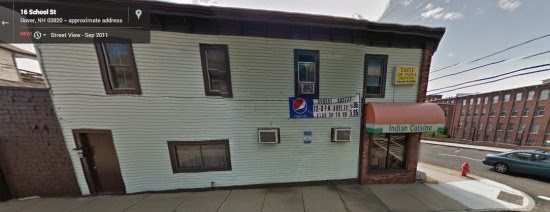
    • Eli knew very little about his Greek and Lebanese background. We found his immigrant ancestors and followed them through documents. With the help of Google maps we got a street view of the building where his great-grandparents once ran a bowling alley. It is now an Indian restaurant. 
    • Another student, Hawar, fled with his family from Iran when he was very young. His father was a freedom fighter. They lived in various places before settling in Maine. His project is more about his immediate family and their journey. I highly encourage the use of maps to illustrate family history if possible. 
    • Caroline, started a discussion with her grandmother who conveniently lives with her family. This led to her grandmother digging out a box that had not been unpacked since she moved to Maine. What a treasure trove! Pictures, newspaper clippings, original passports of her Italian immigrant great-grandparents, Italian birth and marriage certificates and more! I have students take pictures or make copies of valuable items because I don't want to be responsible for their originals. Most importantly, her grandmother was thrilled by her interest and some truly wonderful conversations happened. It would have been so sad if Caroline had never had a chance to learn all this about her family. 
    • I found some newspaper articles for students. One involved an accident where a circus tent pole fell during a performance and injured (fortunately, not seriously) a young girl who was either the student's great-grandmother or great-grandaunt. Census records revealed the NYC 2nd great-grandparents of another student were employed as a chauffeur and a seamstress for a sporting goods shop and his great-grandfather had worked 26 weeks on a CCC road project as a stone mason. 

    Saturday, October 26, 2013

    Ancestry DNA Update

    Ancestry recently updated the DNA profiles of their customers. I've seen a number of postings on Facebook and on blogs about how things changed. I checked mine yesterday. Originally, my estimate was very generic and boring, but not unexpected. My own research reveals that virtually all of my ancestors came from England with a sprinkling from Ireland, Scotland, Wales, and a lone French Huguenot. 


    I was hoping to at least reveal a little bit of biodiversity from the Viking, Germanic, or Norman invasions. When the update was released, Ireland was separated from Great Britain and more detail was added. This did, indeed, reveal some Scandinavian, Western European, and Irish ancestry. What was completely unexpected was the 5% from the Iberian Peninsula. The site says that Iberian DNA is common among those with British ancestry. Here are my updated results. 


    I am just beginning to understand some of the uses of DNA in genealogy. I do know that the more information that is put into the system, the more refined the results will be. I like the fact that Ancestry.com will continue to refine my results without charging more money for each update. I was a bit disappointed that the original results were not more specific but this is more interesting and reflects what I know about my origins. I look forward to learning more and more about DNA and how to interpret and use DNA results in genealogy. 

    Tuesday, July 16, 2013

    Tuesday's Tip - One Piece of Advice

    I was recently contacted by a former student and asked for advice about how to start researching his family history. He had one line that his grandmother had researched back for thirteen generations but many other lines with brick walls. He is using Ancestry.com. I gave him my abbreviated version to get him started and I know there are many, many resources out there that describe the process but I was wondering this...

    1. What was the biggest mistake you made when you started? 
    2. What is one thing you wish someone told you when you were starting out? 
    3. What is your most helpful resource today? 
    4. What is one piece of advice that helps you keep your enthusiasm going when you feel lost and frustrated? 


    My answers - if you are willing to contribute to a follow-up post, please leave your answers in the comments and if you blog about your genealogy, leave me a link so I can include it in the future post. 

    1. Biggest mistake - not keeping track of/documenting sources of information
    2. I wish I knew - how poorly documented and inaccurate many of the online family trees are
    3. Most helpful resource - probably Dropbox - it's where I save images of the documents I find online to source my family tree. It's important to source but it's taken awhile to find a way to keep electronic images so I can easily go back to them. I create a surname folder and then subfolders for each family group and file census records, relevant images from NEHGS etc. in the appropriate folder. A very close second is the online geneabloggers community. I encouraged him to start a blog. 
    4. One piece of advice - keep two trees. One that is carefully documented and one that is undocumented or partially documented to be used a clues for future research. When one line gets you down, switch to another so you get some success to keep you motivated. 


    I don't believe that genealogy is the realm of the retired. I know plenty of young people like this 21 year old who are very interested and excited by exploring their ancestry. It's a matter of finding the time in their busy schedules and encouragement. Like most of us, they will make rookie mistakes but they will get better with practice. 


    Monday, June 10, 2013

    Genealogy & High School Students


    Once again we are at the end of the school year and some of my students have chosen to research their ancestry as their final project. Each year, I get better at structuring the project for student success. The AP US exam was later this year than in the past and students did not have as much time to work on their projects but still achieved exciting results. Some highlights from this year include:

    • A girl who got so caught up in her findings that she exclaimed, "This is so much fun! I spent two hours last night because I got so caught up in researching." She found many documents including her great-grandmother's immigration record. Her great-grandmother arrived on the Mauritania from Germany. The student thought it was really cool that she found a picture of the ship. Then I told her it was a sister ship to the Lusitania - that we learned about when studying the events leading to the First World War. It was fun to see her connect her family to the history we studied during the year. Students are required to find a minimum of 10 records to document their parents, grandparents, and great-grandparents. 
    • A girl who knew her family heritage was Italian but had no idea who the immigrant ancestor was or when he arrived in the United States. I was able to help her locate her great-grandfather's immigration record and we also found she had a great-grandmother from Quebec - something she did not know. She found numerous records to show how her family moved around from Vermont to Massachusetts to Maine. I have encouraged, and most have included, maps to show places their family has lived over time. 
    • A boy who got a large packet of information from his grandmother. I love that this project opens the conversations between the generations. Many have never discussed the family with their grandparents. The project also includes a mandatory interview with a grandparent or if that is not possible, with someone who can share what they know about the life of a grandparent. 
    Photos of people or of family heirlooms, gravestones, family homes are also highly encouraged. Most students haven't thought of including pictures of things in telling their family's story. They begin to realize that the things can help tell the story of the lives of their ancestors. 
    Over the past few years, I've found success in encouraging students to go where the research takes them. Many times school-based family history projects are all about filling in the tree and finding pictures of the people in the tree. I allow my students to focus on one line or multiple lines. Many ask how many generations they need to find. I tell them I would rather have them do it carefully with good research and documentation even if they only get a few generations done. The flexibility to follow the evidence has made it a more fulfilling experience for them. They don't get stressed out about finding "enough" ancestors and focus on finding the stories and learning about the lives of the ancestors they can document.