Showing posts with label students. Show all posts

Saturday, June 20, 2015

Escaping Persecution

This is the family history of another one of my students. During his family history project, he explored the stories that he had heard. However, like many of us when we are children, we only half-listen and don't process the full significance of the word or appreciate the historical significance of our family's past. This was a chance to really listen and document the stories. 

J. is the grandson of a noted psychiatrist, author, and professor at Columbia University. However, both his grandfather and his grandmother came from families who fled Eastern Europe to escape persecution. J's 2X great-grandfather fled Ukraine. The family settled in New York City. J.'s great-grandparents were Benjamin William & (Anita Rosenbloom) Glick. Their parents were Abraham & Rae (___) Glick and Joseph & Ida (___) Rosenbloom. 

From the interview with his grandfather:
In 1905, the Russo-Japanese war was going on, and Ukrainian Jews were being conscripted and dragged to fight in Japan, so there was a good chance my great-great grandparents (Abraham and Rae), residents of highly segregated Odessa, would die in combat. So, Abraham (a tobacco merchant), Rae, and their two daughters fled to New York. To sound less “Jewish,” they bought passports and became the Glicks, to sound more German. Allegedly, they were the “Tarnopolskys,” but there is no confirmation. Allegedly, a son stayed in Ukraine. Abraham opened up a candy store in New York, Rae was a seamstress for a living, and my great-grandfather, Benjamin William Glick, was born in 1907. They lived on the Lower East Side in Manhattan, in a very Jewish neighborhood. My great-grandfather was the first in the family to attend college, going to New York University and Columbia Medical School and becoming a doctor. There was fear among Jews on the Lower East Side. They feared of being rounded up or beaten up. One of my grandfather’s aunts married a Jew who carried a gun out of paranoia. When the family lived in Hell’s Kitchen, he wanted to defend them, in case any cops gave them a hard time. There were many limits that Jews had in society, before the First World War. There were limits on joining clubs, attending colleges, and even what buildings they could live in. There was a question about whether or not Benjamin William would be accepted into med school.

J.'s grandmother is the daughter of Kurt & Ursula (Dzialowsky) Bachrach. Their parents were Jacob & Jenny (Wolff) Bachrach and Jacob & Anna (___) Dzialowsky. 
"Auschwitz I Entrance". Licensed under CC BY-SA 3.0 via Wikimedia Commons - https://commons.wikimedia.org/wiki/File:Auschwitz_I_Entrance.jpg#/media/File:Auschwitz_I_Entrance.jpg

From the interview with his grandmother: 
Her father's father [Jacob Bachrach] was a cantor in a synagogue. He died in a hospital from diabetes-related complications, being taken care of by Catholic nuns. His wife [Jenny (Wolff) Bachrach] was rounded up and killed in Auschwitz. Her father, Kurt Jakob Bachrach, was notified many years later that her name was on the list of Auschwitz victims. Before the Holocaust, they lived a very integrated life in their community in Germany. Before leaving the country, according to my grandmother, Kurt was arrested and questioned many times. He was always able to find his way out with his charm. He was the editor of a Jewish newspaper.  He was a witness to Kristallnacht when Nazis were smashing Jewish storefronts and other belongings owned by Berlinese Jews. He took this as a warning sign to flee. Kurt had gotten married in Germany to Ursula before moving to New York. Her parents were still in Germany when Kurt moved in 1938. Kurt came over because he knew someone who could give him a voucher. Eventually, he was able to send for his wife and her parents. Her parents were able to successfully escape an increasingly anti-semitic 1939 Berlin and flee the country on a ship leaving from Hamburg. Once settled in New York, Kurt sold newspapers at Times Square Station and sold Fuller Brush products in Harlem. Kurt eventually began to work for the Anti-Defamation League. They had him change his name because his name was German, and there was an anti-German sentiment in the United States. He was known in the professional world as “Jack Baker.”

J. asked where he might find a record of his 2X great-grandmother's death in Auschwitz. I suggested that he start with Yad Vashem and this is what he found.
Link to document


Saturday, June 6, 2015

Finding A Lost Family History

Each year my U.S. History students have the option of researching their family history as their 4th Quarter project. Part of the project is to write a reflection or summary of the findings. This comes from a student with a unique situation. As an emancipated minor with no living relatives other than his estranged mother, I admit that I wasn't sure how much we could fill in the blanks. We started with just his father's name and date of death.

Family History Conclusions:
I have learned a lot from this project. Originally, I thought I was going to do the Individual in History project because I didn't even have my grandparents' names. However, using your knowledge and the power of the internet, something was unlocked that I thought would stay locked forever. It's like the Ancestry.com commercial, except it was real.

All of the sudden, I was pulled into my family history and with every name, every place, photo, address, story, I got more and more interested until I was doing more of the Family History project than the Individual in History one. That's what was so cool. I was unlocking the past and it wasn't even required.

After leaving Windham this past summer, I felt disconnected. I had always felt this way. I never knew any relatives and never met anyone who knew any stories. After leaving the last real relative still around, I felt like I would never know who my family was. It didn't bother me much at first, but everyone should know a little of where they come from.

When this project started, it hit me again how little I knew and how sunken inside I felt. Now coming out the other side of the project, I feel so great. I learned so much that I thought would stay hidden from me forever. It has helped me accept how families can change and people can leave, die, or even become unreachable, but in the end, family is family. It is important to keep that in mind.

More about what we found

Tuesday, June 2, 2015

Embarking on a Journey of Discovery - Family History Project 2015

One reason that I love the end of the school year is because some of my students choose to work on family history for their end of the year project. Each year this gets better and better. This year I had a few students who did double duty, they wanted to do a different project for a grade but worked on their family history just for fun. A few of the stories deserve their own space and can be found here:


Escaping Persecution
Napoleon, the Bootlegger
Something From Nothing & Finding A Lost Family History
The African Missionaries

A lot of students trace their families back to the Scottish and Irish settlers of Nova Scotia, New Brunswick, and Prince Edward Island. There are also quite a few with French Canadian ancestry. Sam's family comes from the same town, Sackville, New Brunswick, as my husband's family. Alex found ancestors immigrating from Italy, Ireland, and Belgium in the late 19th century.


The best parts are the conversations that take place between my students and their family members as they learn about their ancestors. Alec learned a lot more about his West Virginia branch and the tough life of his grandmother after the tragic death of her father. Maelah decided her family is boring because they didn't have any scandals and were immigrant mill workers from French Canada. I'm still hoping to find something that fills in some details for her and make her family story more interesting.


A number of students have family members who have already done quite a bit of the gathering of names so they are working on finding the interesting stories told by the documents. What was the profession according to the census? Jacob learned that one of his great-grandfathers was a musician in an orchestra. How much (or how little) money did your ancestor make? Adam found that his ancestor worked 52 weeks in 1939 and made $528 for the entire year. They paid $10/month to rent their house.

Of those who can go back to the Great Migration, Jeff is a direct
descendant of Mary (Towne) Estey. She was hanged as a witch on September 22, 1692. A few share distant connections with me. Jack and I connect through Nathan Lord, of Berwick, Maine. Patrick and I connect through the Abbots of Andover, Massachusetts. Ryan and I connect through John Cheney of Newbury, Massachusetts. It became a bit of game to see if they could find a cousin connection with me.

On the military front, we found a few veterans. Patrick found a Civil War ancestor with an awesome name: Ivory Snow. His middle name was Fogg so he was Ivory Fogg Snow. Lauren knew her 2nd great-uncle had been shot down in World War II. She didn't know her great-grandmother also had a fiance killed in the war. Alex found her 2X great-grandmother, who lived in Portland, Maine and was born in Nova Scotia, married a man from Virginia. On the marriage certificate from 1919, it lists his occupation as "soldier." Since many troop ships came through Portland during and after World War I, we speculate that they might be how they met.

I have second generation immigrants who are documenting their family and writing the stories of the home country and the names and dates of relatives before those are lost to future generations. I have a student who had family affected by the Holocaust. He is interviewing the son of the survivor and writing the memories and stories to preserve them. 

The projects aren't complete yet. They are due on Friday. I may have to share more updates and interesting finds after that. I'm excited to see so many of my students take an interest in their family history. 

The African Missionaries

Ryan had heard that his 3X great-grandparents did mission work in Africa. However when we started looking online for records for his family tree, we found someone had posted many photos with great descriptions of their life in Rhodesia. I reached out through my Ancestry account to this other member and discovered that he was another descendant and had been in contact with Ryan's great-grandmother, but he lost contact with the family after her death. Email addresses were exchanged so hopefully the sharing will be able to continue. Jim gave me permission to share some of the photos in my blog. Credit to Jim Lawrence, Ancestry member jimbet112.


Something from Nothing

This story is one of my favorites because it was one of the most challenging. My student, Derek, is an emancipated minor. He has no contact with his mother and his father died in 2001. He chose a different project but challenged me to find anything about his family. All he gave me was his father's name and date of death. I started by looking for an obituary for his father and that gave use his grandparents' names. We progressed along his father's lines and rather quickly added more than fifteen direct line ancestors. The records that were the most useful were marriage records, death records, and census records. We took his father's family back to the early 19th century on all lines and found out all the branches of his father's tree were in Meigs County, Ohio during this time. The Bodkins are one of the families in his tree:
Ohio Bodkins in the 1880 Census
He also knew bits and pieces of his mother's family. He knew his uncle had died and found an obituary for him. He also knew his mother had an Aunt Clara and he found her obituary. Using the names from those records, he started piecing together the records and clues to find more distant relatives. As he searched, he found memories coming back to him of things he had heard throughout his life. His mother lost contact with her father when she was about four years old. However, we found him using Derek's memory of a few details - including the fact that he was in the Air Force. It turns out that he was a pilot in World War II.
Courtesy of Newspapers.com - The Fresno Bee, Monday, January 8, 1945
Needless to say, it was great to see Derek's enthusiasm grow. He proved to have great detective skills and was able to come up with clues to help move his research forward. On some days, he was in my room multiple times just to share what he found or check and see if I found more information. He really liked doing the detective work and putting together evidence to make a case for a particular relationship. In the end, he switched from his original project to the family history project. As of now, he has 70 ancestors with 183 census, birth, death, marriage, and military records documenting the connections.
5th great-grandparents - Jonathan Adams served as a Dragoon in the Revolutionary War.
Margaret, his widow, received a pension of $50 every six months.

Napoleon the Bootlegger

While helping my student, Adam, trace his family history we found a connection to the Prohibition era in the newspaper archives. His 2X great-grandfather was Napoleon Cayer of Rumford, Maine. You can see a picture of Napoleon here.

The Lewiston Daily Sun, Sunday, Sep. 1, 1926
Napoleon's problems with illegal liquor didn't end with Prohibition. He was back in court at the age of 83 for violating liquor laws again.
The Lewiston Daily Sun, Sunday, October 7, 1939
Adam's tree has deep roots in Quebec, New Brunswick, and northern Maine.

Saturday, March 21, 2015

Genealogy Makes History Come Alive!

Student project
Here is my second interview for NERGC. Catherine "Casey" Zahn is the author of two teachers' guides on genealogy, available from Heritage Books (search her last name). She enjoys sharing her passion for genealogy with her students as a way to make history come alive. She was the program chair for the FGS conference in Philadelphia and speaks frequently at state and regional conferences. This will be her first time speaking at NERGC, a conference she loves.


  • Can you tell me a little bit about your teaching background? 
I have been teaching for over 30 years -mainly in elementary school. My school district was a farming community in the early 80s and is now part of the NYC/Philly suburbs. My class is a diverse one represented by many different cultures. I became a teacher because I thought it would be fun to teach...and it has been! I also have been using genealogy with great success for the past 25 years and give lectures/classes at the adult level as well as high school.
  • For those who are not familiar with the Common Core State Standards, what parts are most aligned with the work of genealogical researchers and family historians?  
Believe it or not, many of the aspects of the CCSS are very familiar to genealogists and historians. The state where I teach recently adopted the  newest Social Studies standards that align well with skills a genealogist uses. From learning about a child's neighborhood in the elementary school to discovering how the cultures in the community impact the people who live there parallel nicely with genealogy. Children are asked to study how their communities changed over time, create maps and diagrams, to compare their lives to those of their neighbors in the past and to use digital information to make discoveries. There are even standards on immigration and the immigration process.
  • What is the benefit of using research about one's family to teach or reinforce these skills for students?
There is a huge benefit of using genealogy research -your own or a child's- to make Social Studies come to life for the children. If you are teaching about colonial times and happen to have an ancestor who played a role in establishing the community, what better way to portray his/her life in the community at the time it was established? My students love it when I tell them stories about my seafaring ancestor and when I portray him as the captain of the ship they are sailing on when they  are sailing to the English colonies in colonial times. The best part is that any ancestor can cross time and pop in a conversation on any subject.
 
Making social studies relevant to a child's place/home/time can also have a huge impact. For example, every year I give a presentation about the township where I teach. The class loves it when they discover Ben Franklin walked through their town when he ran away from Boston. This year was fabulous because one of my children lives on the road where he passed by. Talk about a teachable moment!
 
  • What has been your biggest challenge? 
The biggest challenge is my most frustrating one...how do we teachers keep not only our own students but colleagues and the public, in general, interested in history? I find it appalling that late night hosts get a laugh at the ignorance of people who can't tell their reporters who was the first president of the US or if Hawaii is a state. (By the way I love to floor my children when I tell them that George  Washington was NOT the first president-He was the first under the US Constitution!) Politicians mess up matters by demanding that teachers need to prepare students for the future and to work in a global economy. But when will they realize it takes social studies to move our children forward to these goals? How can we expect children to work globally if they can't understand their own history, past, and culture?
 
  • What assignments do your students find most interesting to complete or what assignments do you find most interesting to teach? 
I find that something as simple as a timeline can be very useful for children to understand the concept of time. Children as young as kindergarten age can begin this process by sorting pictures as now and then. Another activity I use with success is my Veteran's project. I invite the children to interview a relative or neighbor who served our country. If they don't know of anyone, they are encouraged to research a president or famous military hero/heroine. It is very moving to read about their stories and invites new avenues and opportunities for a teacher to grab hold of and use.
 
  • How hard is it to work on your own genealogy interests with all your other activities? 
It is not hard at all! Can we say summer vacation and school breaks? I feel that being a teacher and loving genealogy can be a win/win situation. If I am having a tough day at school, a few minutes on the computer in an online database can do wonders for the spirit. But you have to be careful to limit your time or you can find yourself staring down 8 year-olds after an all night genealogy jaunt!
 
  • Has working in the field of genealogy helped you be a better teacher?
Yes and being a teacher has made me a better genealogist. Tools of both professions are intertwined and can compliment each other. 
 
  • What is your favorite thing about attending and/or speaking at genealogy conferences? 
I love attending genealogy conferences -especially NERGC- because I am always looking for new places, records, and ideas to broaden my genealogical knowledge. If I can learn about an obscure collection that is held only at the Connecticut State Library or Rhode Island Historical Society, I am going to plan my trip home for a visit with my family to include a visit at the repository. I have had much success when I do this for genealogy reasons. Being a teacher and having an opportunity to "give back" to other educators is a great way to share my knowledge and to learn new ideas that I can bring back to my students.

Check out her blog and website:

My stories about doing genealogy projects with students

Tuesday, June 10, 2014

Family History Project 2014

For the past few years I've been refining my end of the year Family History Project. It is one option for my Advanced Placement US History students after they take the national exam in mid-May. It keeps getting better and better each year. My students did a great job and although I cannot write about them all, here are some highlights from this year's projects. 


  • One student, Dan, recognized a common ancestor from my blog - way back at the beginning of the year. His aunt had put together a family book and he remembered the name. With this project we sorted out our relationship - we are 5th cousins, once removed and both descend from William Yates, the founder of the town of Greenwood, Maine. Although his aunt had done much research, this project got him into his family's stories - interesting deaths, a cousin who was present at Lincoln's assassination, and conversations with living relatives. 
  • Andrew's family have been Mormon for many generations. He knew lots of names but not much of the story of his family's experiences. He researched and found his family was living in Nauvoo, Illinois during the persecutions and documented their pioneer migration to Utah. He was initially concerned that he would not have enough to research until he started to look beyond the names and dates. 
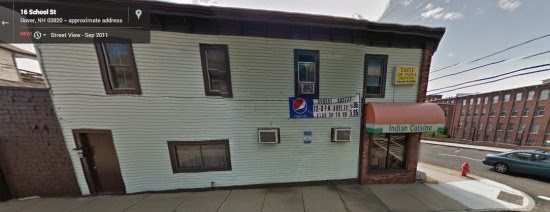
  • Eli knew very little about his Greek and Lebanese background. We found his immigrant ancestors and followed them through documents. With the help of Google maps we got a street view of the building where his great-grandparents once ran a bowling alley. It is now an Indian restaurant. 
  • Another student, Hawar, fled with his family from Iran when he was very young. His father was a freedom fighter. They lived in various places before settling in Maine. His project is more about his immediate family and their journey. I highly encourage the use of maps to illustrate family history if possible. 
  • Caroline, started a discussion with her grandmother who conveniently lives with her family. This led to her grandmother digging out a box that had not been unpacked since she moved to Maine. What a treasure trove! Pictures, newspaper clippings, original passports of her Italian immigrant great-grandparents, Italian birth and marriage certificates and more! I have students take pictures or make copies of valuable items because I don't want to be responsible for their originals. Most importantly, her grandmother was thrilled by her interest and some truly wonderful conversations happened. It would have been so sad if Caroline had never had a chance to learn all this about her family. 
  • I found some newspaper articles for students. One involved an accident where a circus tent pole fell during a performance and injured (fortunately, not seriously) a young girl who was either the student's great-grandmother or great-grandaunt. Census records revealed the NYC 2nd great-grandparents of another student were employed as a chauffeur and a seamstress for a sporting goods shop and his great-grandfather had worked 26 weeks on a CCC road project as a stone mason. 

Tuesday, July 16, 2013

Tuesday's Tip - One Piece of Advice

I was recently contacted by a former student and asked for advice about how to start researching his family history. He had one line that his grandmother had researched back for thirteen generations but many other lines with brick walls. He is using Ancestry.com. I gave him my abbreviated version to get him started and I know there are many, many resources out there that describe the process but I was wondering this...

  1. What was the biggest mistake you made when you started? 
  2. What is one thing you wish someone told you when you were starting out? 
  3. What is your most helpful resource today? 
  4. What is one piece of advice that helps you keep your enthusiasm going when you feel lost and frustrated? 


My answers - if you are willing to contribute to a follow-up post, please leave your answers in the comments and if you blog about your genealogy, leave me a link so I can include it in the future post. 

  1. Biggest mistake - not keeping track of/documenting sources of information
  2. I wish I knew - how poorly documented and inaccurate many of the online family trees are
  3. Most helpful resource - probably Dropbox - it's where I save images of the documents I find online to source my family tree. It's important to source but it's taken awhile to find a way to keep electronic images so I can easily go back to them. I create a surname folder and then subfolders for each family group and file census records, relevant images from NEHGS etc. in the appropriate folder. A very close second is the online geneabloggers community. I encouraged him to start a blog. 
  4. One piece of advice - keep two trees. One that is carefully documented and one that is undocumented or partially documented to be used a clues for future research. When one line gets you down, switch to another so you get some success to keep you motivated. 


I don't believe that genealogy is the realm of the retired. I know plenty of young people like this 21 year old who are very interested and excited by exploring their ancestry. It's a matter of finding the time in their busy schedules and encouragement. Like most of us, they will make rookie mistakes but they will get better with practice. 


Monday, June 10, 2013

Genealogy & High School Students


Once again we are at the end of the school year and some of my students have chosen to research their ancestry as their final project. Each year, I get better at structuring the project for student success. The AP US exam was later this year than in the past and students did not have as much time to work on their projects but still achieved exciting results. Some highlights from this year include:

  • A girl who got so caught up in her findings that she exclaimed, "This is so much fun! I spent two hours last night because I got so caught up in researching." She found many documents including her great-grandmother's immigration record. Her great-grandmother arrived on the Mauritania from Germany. The student thought it was really cool that she found a picture of the ship. Then I told her it was a sister ship to the Lusitania - that we learned about when studying the events leading to the First World War. It was fun to see her connect her family to the history we studied during the year. Students are required to find a minimum of 10 records to document their parents, grandparents, and great-grandparents. 
  • A girl who knew her family heritage was Italian but had no idea who the immigrant ancestor was or when he arrived in the United States. I was able to help her locate her great-grandfather's immigration record and we also found she had a great-grandmother from Quebec - something she did not know. She found numerous records to show how her family moved around from Vermont to Massachusetts to Maine. I have encouraged, and most have included, maps to show places their family has lived over time. 
  • A boy who got a large packet of information from his grandmother. I love that this project opens the conversations between the generations. Many have never discussed the family with their grandparents. The project also includes a mandatory interview with a grandparent or if that is not possible, with someone who can share what they know about the life of a grandparent. 
Photos of people or of family heirlooms, gravestones, family homes are also highly encouraged. Most students haven't thought of including pictures of things in telling their family's story. They begin to realize that the things can help tell the story of the lives of their ancestors. 
Over the past few years, I've found success in encouraging students to go where the research takes them. Many times school-based family history projects are all about filling in the tree and finding pictures of the people in the tree. I allow my students to focus on one line or multiple lines. Many ask how many generations they need to find. I tell them I would rather have them do it carefully with good research and documentation even if they only get a few generations done. The flexibility to follow the evidence has made it a more fulfilling experience for them. They don't get stressed out about finding "enough" ancestors and focus on finding the stories and learning about the lives of the ancestors they can document.